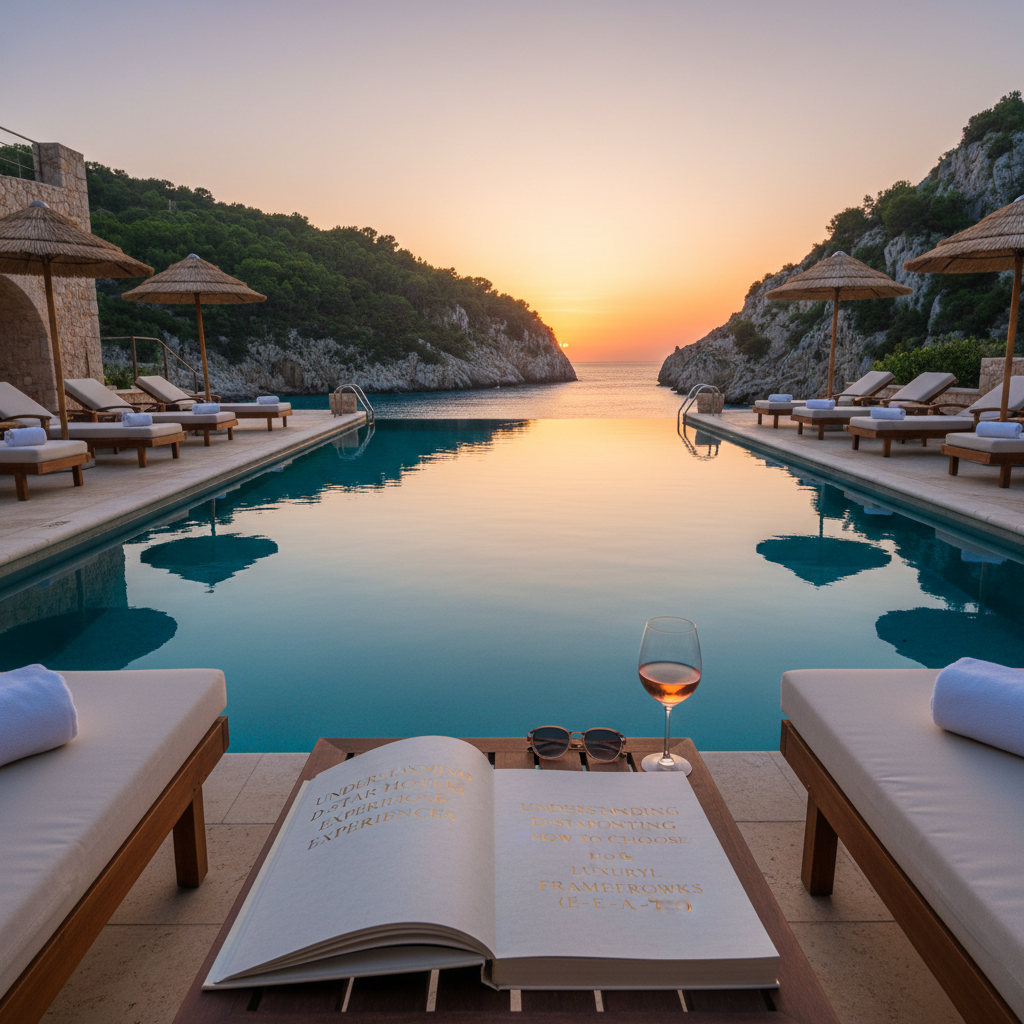
Why Some 5-Star Hotels Feel Disappointing (And How to Avoid Them)
The short answer: the 5-star label rewards a checklist of amenities, not the things that actually make a stay feel exceptional — anticipatory service, design that prioritises comfort over spectacle, and genuine privacy. The most disappointing properties hit every line on the rating-body's spreadsheet and still leave guests flat. Below is the framework our editors use to separate the two before booking.
What does "5-star" actually mean?
Not what most travellers assume. The designation is awarded by regional rating bodies (AA, Forbes, Michelin Keys, national tourism boards) against a list of physical and operational criteria: minimum room size, 24-hour room service, multilingual concierge, turndown, a certain ratio of staff to guests. It says nothing about whether the service is warm, the design is coherent, or the bedroom is quiet at 2am. Two hotels with identical ratings can deliver opposite experiences.
This is the root of the disappointment most discerning travellers feel: they were promised an experience and given an inventory.
The seven signs of a disappointing 5-star hotel
These are the failure patterns we see most often in editorial visits. Any one in isolation is forgivable. Three or more together is a property to avoid.
1. Service that is polite but not anticipatory
Real luxury service notices things before you ask. It remembers that you ordered an oat milk flat white on Tuesday and brings one to your sun lounger on Wednesday. Disappointing 5-stars are reactive: every request becomes a small transaction, every problem requires you to raise it. The staff are trained, courteous and efficient — and the cumulative effect is that you feel managed rather than hosted.
2. A lobby that doubles as a thoroughfare
A great lobby is a room you'd happily sit in for an hour. A disappointing one is a corridor with sofas — crowded at check-in, echoing at breakfast, with day-guests, wedding parties and tour groups passing through the same space you'd hoped to relax in. If the public spaces don't feel like yours as a paying guest, the property has sold the same square footage twice.
3. Design that photographs better than it lives
The room looks superb on Instagram. In person, the bedside reading lamp is positioned for the photographer, not for you. The bath is freestanding and beautiful and takes 25 minutes to fill. The minibar is hidden behind a panel you can't find. Form has eaten function — a hallmark of properties designed for launch press, not repeat stays.
4. Noise the property pretends isn't there
Thin walls. Doors that slam down the corridor at 1am. A breakfast terrace directly under your balcony. A pool bar with a DJ until midnight. Soundproofing is expensive and invisible in photos, so it is the first thing cut. If reviews mention "we could hear our neighbours" more than once, believe them.
5. F&B that exists to be ticked off
Three restaurants. A rooftop bar. A 24-hour in-room dining menu. And none of them is genuinely good — because the property is trying to be self-sufficient rather than excellent. The best hotels often have one serious restaurant and direct you to the town for everything else.
6. A spa priced for the brochure, not the experience
Treatment rooms that share a wall with the corridor. A relaxation area that doubles as a waiting room. Therapists who follow a script. Steam rooms that aren't hot. The spa is the easiest amenity to fake because most guests visit once and don't return.
7. A loyalty programme that matters more than you do
When the staff visibly treat platinum-tier guests differently from everyone else, the property has revealed what it actually optimises for. True luxury treats every guest as though they are the most important one in the building, because in that moment they are.
How to read past the star rating before you book
A few habits that consistently surface the difference:
- •Read the three-star reviews, not the one-stars or the five-stars. The one-stars are people who lost luggage. The five-stars are launch invitations and honeymoons. The three-stars are paying guests with a working frame of reference, and they will tell you exactly where the property falls down.
- •Look for repeat bookings. Properties that quote returning-guest percentages tend to be the ones that earn them. If a hotel only ever talks about new arrivals, ask why.
- •Check the age of the photography. A property that hasn't refreshed its hero shots in five years is usually a property that hasn't refreshed its rooms in five years either.
- •Trust the small details over the big ones. Linen thread count, water-glass quality, the temperature of the pool, the speed of the Wi-Fi password arriving in your room. These are the costs a property cuts last when it cares, and first when it doesn't.
- •Be suspicious of "world-class" in marketing copy. Hotels that are world-class don't have to say so.
What genuinely great 5-star hotels do differently
Across the properties we recommend, a few traits repeat:
- •A clear point of view. They are unmistakably themselves — a Como villa, a Kyoto ryokan, a Cape Winelands estate. They are not trying to be everything to everyone.
- •Restraint. Fewer restaurants done seriously. Fewer rooms staffed generously. Fewer amenities, executed without compromise.
- •Staff who have been there for years. Tenure is the single most reliable proxy for genuine hospitality culture. Ask at check-in how long the front-office manager has been with the property.
- •A sense of place. The materials are local. The art is commissioned, not catalogued. The food references the region rather than a global template.
- •Privacy as the default. Loungers spaced generously. Restaurant tables that aren't on top of each other. Corridors you don't share with day-guests.
Frequently asked questions
Are 5-star hotel ratings standardised internationally?
No. Star ratings are awarded by regional bodies with different criteria, and a 5-star hotel in Dubai is rated against a different rubric than one in Switzerland or Japan. This is why two properties with identical stars can feel very different in practice — and why our editorial framework prioritises what a stay actually delivers over what the marketing claims.
What's the difference between a 5-star and a true luxury hotel?
A 5-star hotel meets a checklist of amenities; a true luxury hotel meets a guest. The first is graded on inventory, the second on experience. The most discerning travellers eventually learn to trust independent editorial curation over the star rating itself.
Why do some 5-star resorts feel crowded?
Because the rating doesn't account for occupancy density — pools, restaurants and beach clubs can all hit fire-code maximums and still qualify. The best luxury properties deliberately under-occupy public spaces, which is expensive and rarely advertised.
How do I avoid booking a disappointing 5-star hotel?
Read three-star reviews from the last six months, prioritise properties with high repeat-guest rates, choose owner-operated or small-collection hotels where possible, and use editorial recommendations that have actually visited. Our framework for what makes a hotel genuinely 5-star explains the deeper criteria we apply to every property in the Only5Star collection.
Is a more expensive 5-star hotel always better?
No. Price tracks brand and location more than experience quality. Some of the most disappointing stays in our editors' notebooks are at the most expensive properties on the planet, and some of the most memorable are at small, owner-run hotels that cost a fraction of the headline names.
Part of Our Guide