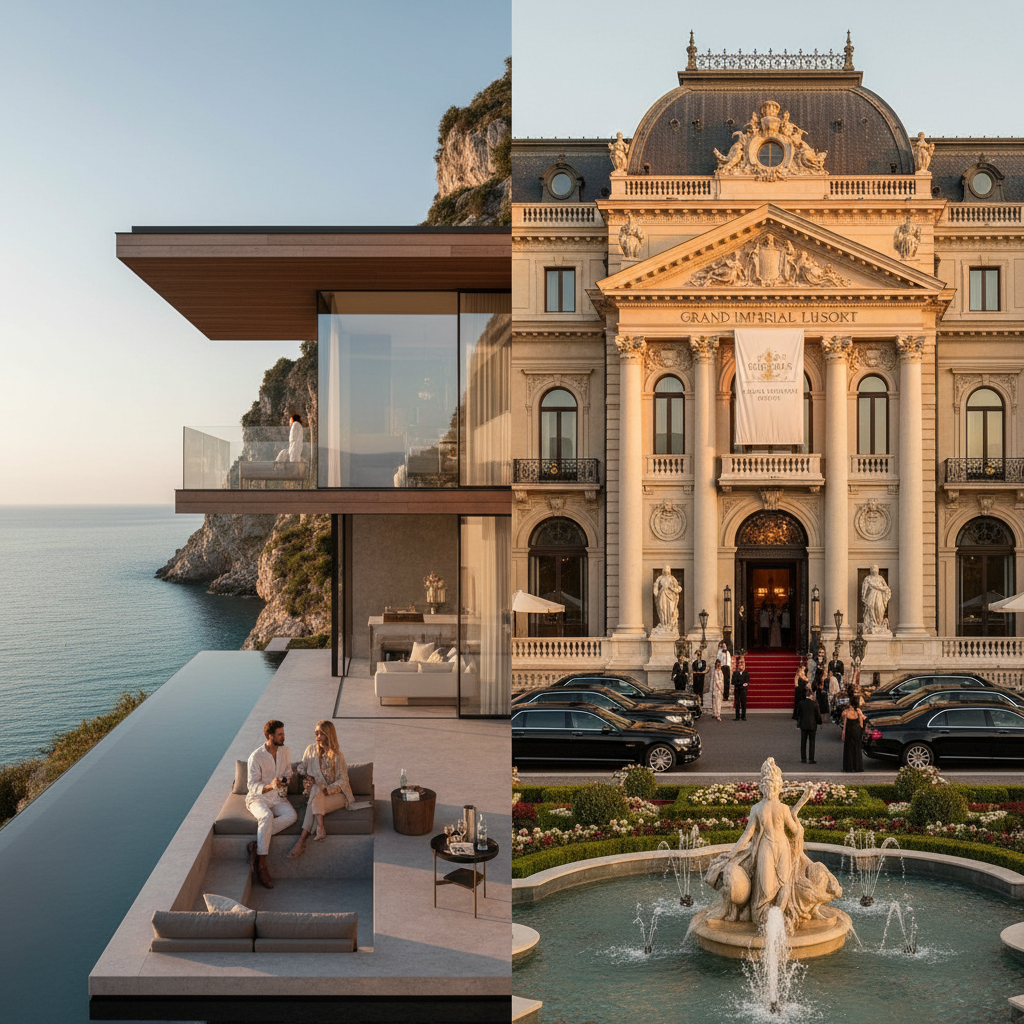
Quiet Luxury vs. Traditional Luxury: Understanding the Distinction
The fundamental difference between quiet luxury and traditional luxury lies in their approach to display and discernment. Quiet luxury prioritises discretion, refined craftsmanship, and an understated aesthetic that speaks to an informed appreciation for quality, rather than overt branding or conspicuous consumption. Traditional luxury, by contrast, often embraces visible markers of affluence through prominent branding, ornate design, and a more pronounced scale of grandeur.
Defining Traditional Luxury
Traditional luxury, as it has been broadly understood for decades, frequently entails a discernible demonstration of wealth and prestige. This often manifests in grand architectural statements, opulent interiors adorned with elaborate detailing, and service defined by formal rituals. The emphasis is on recognisable symbols of affluence, from designer logos in boutique hotels to vast, gilded public spaces. For many, this has been the benchmark for an elevated experience, where the visual impact and immediate perception of luxury are paramount. It is about a certain kind of abundance and a clear, often immediate, visual message of expense and exclusivity.
Defining Quiet Luxury
Quiet luxury, conversely, represents a shift towards a more subtle and discerning form of affluence. It is characterised by an aesthetic of understatement, where quality is communicated through unparalleled materials, artisanal craftsmanship, and meticulous attention to detail that might only be apparent to a connoisseur. Services are often anticipatory and highly personalised, operating with seamless invisibility rather than overt formality. The design aesthetic tends towards clean lines, thoughtful functionality, and enduring elegance, avoiding transient trends or ostentatious displays. This approach values privacy, authenticity, and an inherent sense of calm, cultivating an atmosphere where the experience itself is the ultimate indicator of excellence, not its external presentation. It's about feeling the quality, not just seeing it.
Key Distinctions
While both forms offer exceptional quality, their expression differs significantly:
Aesthetic & Design
- •Traditional Luxury: Often characterised by ornate embellishments, rich colour palettes, polished surfaces, and a tendency towards grandeur. Think large chandeliers, Versailles-inspired interiors, and abundant, often obvious, decorative elements.
- •Quiet Luxury: Favours minimalist elegance, natural materials in muted tones, bespoke furnishings, and expert craftsmanship. The design speaks through texture, proportion, and subtle details, often prioritising comfort and functionality over showmanship.
Service Philosophy
- •Traditional Luxury: Tends towards formal, visible service with structured rituals. There's often a clear hierarchy and a focus on meeting stated requests with efficiency and politeness.
- •Quiet Luxury: Emphasises anticipatory, intuitive service that often anticipates needs before they are voiced. The interaction feels more personal, less formal, and the service staff often blend seamlessly into the background, ensuring privacy and ease.
Branding & Recognition
- •Traditional Luxury: Brand names and logos are often prominent, serving as clear indicators of status and quality. The hotel or brand itself may be a destination, recognisable globally.
- •Quiet Luxury: Branding is discreet, almost invisible. The value is inherent in the product or experience, not in its label. It appeals to those who value intrinsic quality over external validation. It’s about being in the know rather than showing off.
Overall Experience
- •Traditional Luxury: May offer a grand, aspirational experience, often designed to impress and provide a sense of expansive indulgence.
- •Quiet Luxury: Provides a more intimate, refined, and often deeply personal experience. It's about genuine comfort, sophisticated simplicity, and a feeling of being genuinely cared for without fuss or spectacle. The experience is often restorative and enriching, offering a deeper connection to the place or moment.
Important Considerations
When discerning between quiet and traditional luxury, consider what ultimately defines a truly exceptional experience for you. Is it the overt grandeur and recognisable markers of opulence, or the subtle nuances of unparalleled service, impeccable design, and a serene, understated environment? Quiet luxury often thrives in boutique settings or within exclusive wings of larger establishments, where bespoke attention can be consistently delivered. Traditional luxury can still offer profound satisfaction, particularly for those who appreciate classic grandeur and a celebratory atmosphere. Understanding these distinctions allows for a more informed choice, aligning your preferences with the specific character of a property.
Part of Our Guide